
8 Layout Tweaks That Make Outdoor Spaces Feel More Restful
Outdoor spaces feel restful when they remove friction instead of adding features. Many patios, decks, and yards feel busy because the layout asks the body to make too many micro-decisions at once. Where to sit. Where to walk. Where to look. Calm arrives when those decisions are quietly answered by the space itself. These layout tweaks work with human movement and attention rather than against them. They rely on spacing, orientation, and restraint, not decoration, to help outdoor areas feel slower, softer, and easier to be in.
Pull Seating Slightly Away From Hard Edges
Seating placed directly against walls, fences, or railings often looks tidy but feels subtly tense. The body reads the hard edge as a boundary, which limits posture and movement even when there is plenty of space elsewhere.
Pulling seating forward by even a foot creates breathing room behind the body. That buffer reduces pressure and makes the space feel more open without sacrificing intimacy. People settle more naturally because the seating no longer feels pinned in place.
Establish One Clear Visual Anchor
When an outdoor space lacks a visual anchor, the eye keeps scanning. That constant movement creates low-level mental noise. A single focal point gives attention somewhere to land and rest.
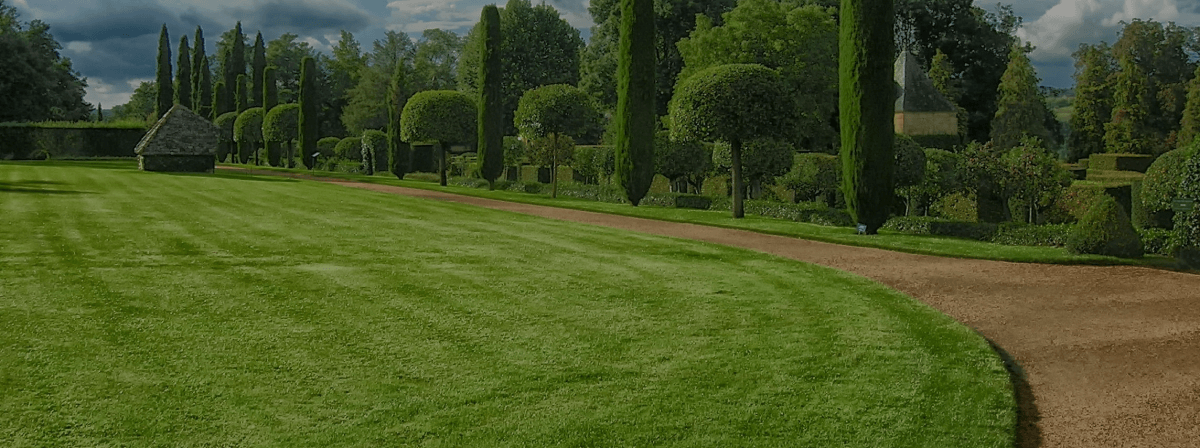
This anchor does not need to be dramatic. A tree, a large planter, a fire bowl, or even an open view works. Once it exists, furniture placement becomes intuitive, and the space feels grounded instead of scattered.
Soften Straight Lines Where People Are Meant to Stay
Straight lines communicate direction and momentum. They are useful for paths, but they can feel rigid in areas meant for rest. Softening those lines slows the experience of the space.
Curved seating arrangements, rounded planters, or gently arced layouts signal that lingering is welcome. The body responds by relaxing rather than preparing to move on. Calm increases because movement is no longer implied.
Limit How Many Routes Cut Through the Space
Spaces that function as crossroads rarely feel restful. When multiple paths cut through seating or gathering areas, the body stays alert, anticipating interruption.
Clarifying circulation to one or two obvious routes protects rest zones. Movement still flows, but it stays predictable. Once traffic has a clear place to go, the remaining space feels quieter and easier to occupy.
Lower Visual Activity Around Seating
What sits at eye level matters more than what fills the ground. Tall objects, dense plantings, or stacked decor near seating keep the visual field busy even when the body is still.
Lowering or thinning elements around rest areas creates visual openness. The eye relaxes because it no longer has to navigate clutter. The space feels calmer without becoming sparse or unfinished.
Align Furniture With Natural Sightlines
Furniture that ignores natural views creates subtle discomfort. Chairs that face walls, awkward angles, or blank edges force the body to twist or shift repeatedly.
Aligning seating with views of plants, open sky, or distant scenery allows posture to settle. The body relaxes because it is not compensating for poor orientation. Comfort improves without changing the furniture itself.
Leave One Zone Intentionally Unfilled
When every corner is occupied, the space feels demanding. An intentionally open area gives the eye somewhere to rest and provides contrast that makes everything else feel more intentional.
This empty zone does not need a function. Its value is psychological. It slows the pace of the entire layout and prevents visual fatigue, even in small outdoor spaces.
Group Elements Instead of Spreading Them Evenly
Even spacing feels orderly on paper but restless in practice. When objects are spread evenly, the eye jumps constantly from one to the next.
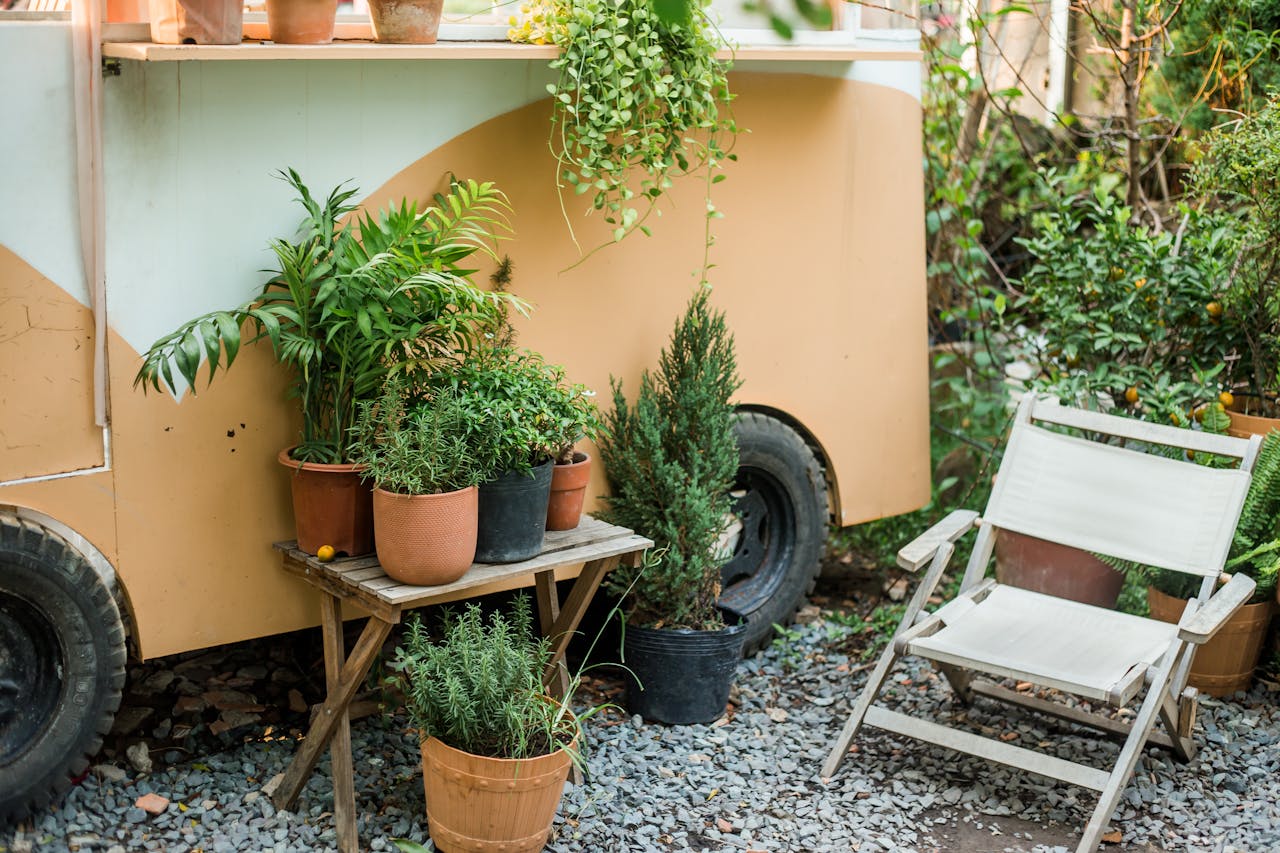
Grouping furniture, planters, or features into clear clusters reduces visual noise. Each cluster reads as a single unit. The space feels organized, predictable, and easier to inhabit, which naturally supports rest.
Outdoor calm rarely comes from adding more. It comes from arranging what is already there so movement feels obvious, views feel intentional, and nothing competes for attention unnecessarily. When layout supports the body instead of challenging it, rest becomes the default response.